
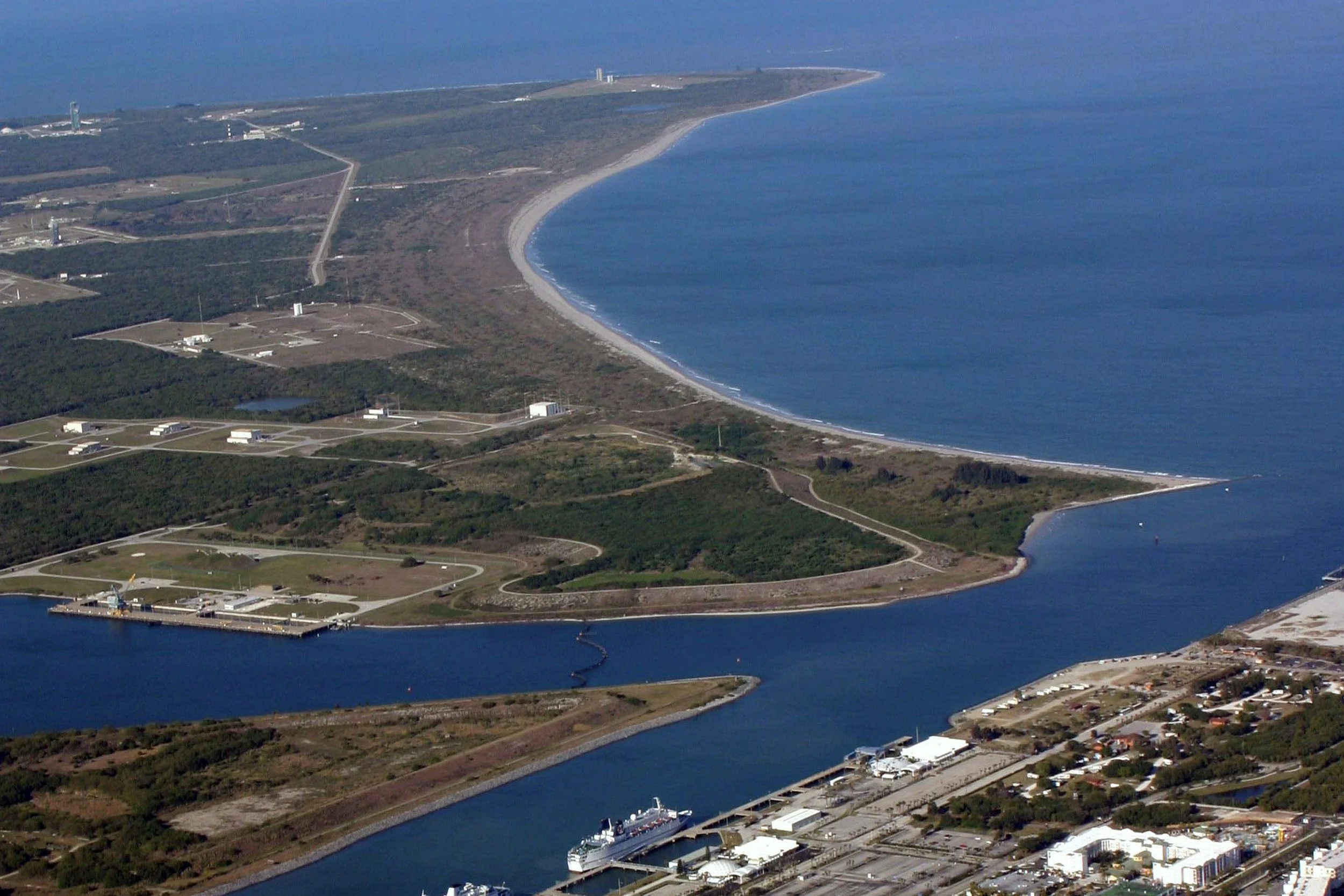
Area 51? Well Maybe LC-51
Possible Area of LC-51
Cape Canaveral S.F.S. FL- UPDATE to a previous story.
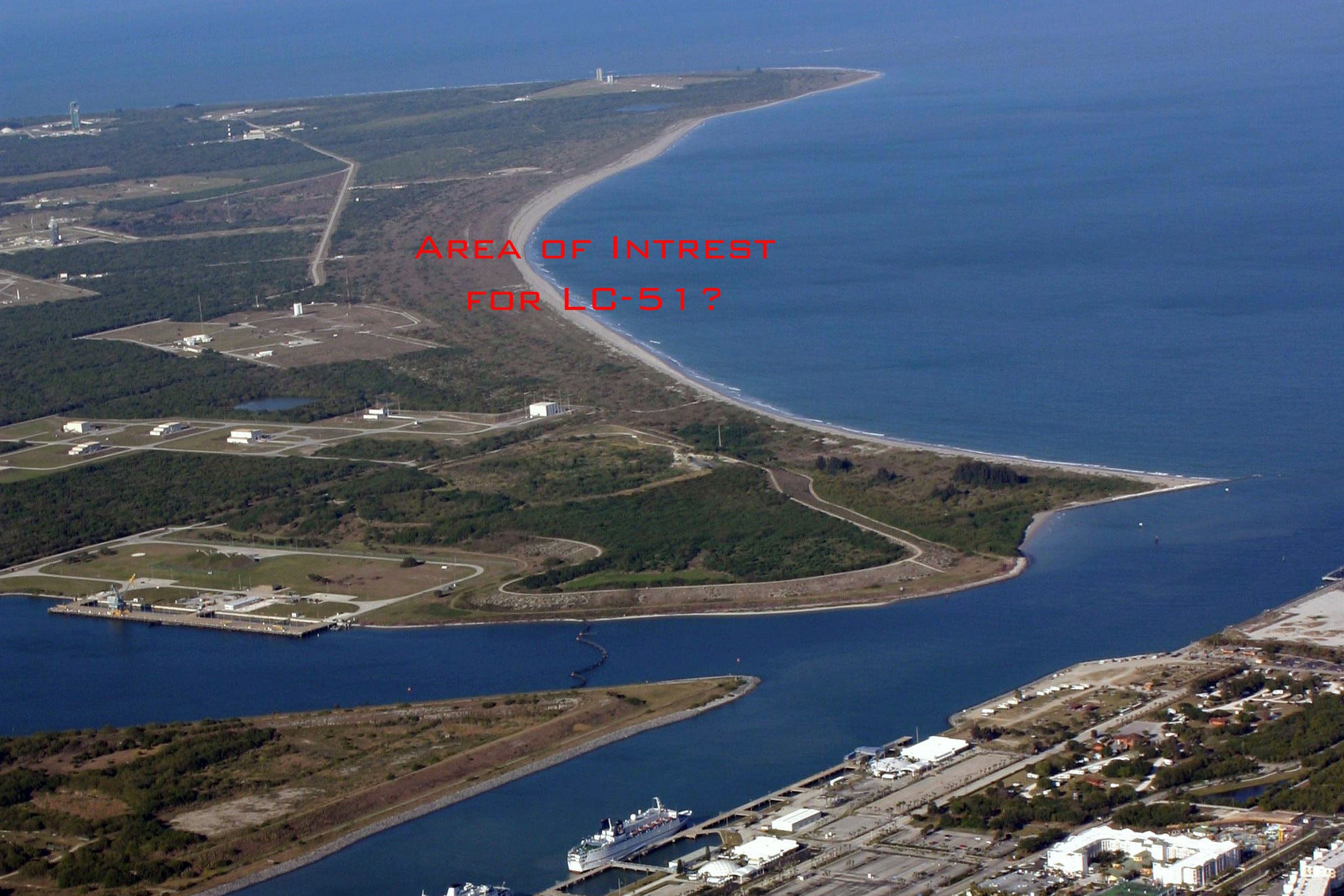
Aerial Stock Image By: Michael Howard - We Report Space
Is Cape Canaveral getting a new launch pad? Well, maybe……
Several outlets have been reporting that the military is looking at the idea of placing a new launch complex a couple of miles south of the current LC-46. The area in question might possibly be an undeveloped area near the historic pads of LC-25, LC-29 and LC-17.
We Report Space reached out to Space Launch Delta 45 (SLD45) and they were gracious to respond to our inquiry.
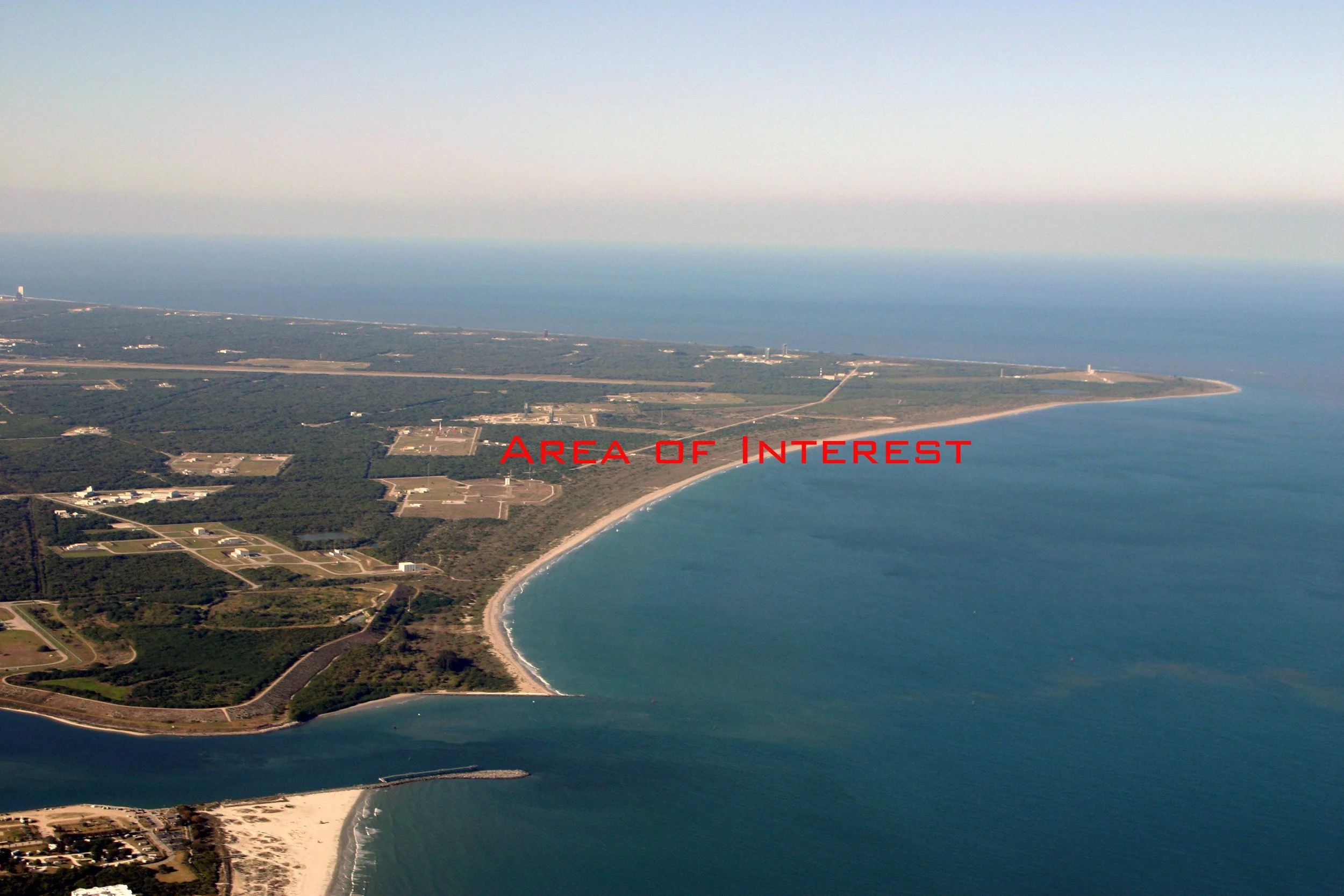
Aerial Stock Image By: Michael Howard - We Report Space
In the press release from SLD-45:
“The Department of the Air Force is preparing an assessment to evaluate the potential environmental impacts associated with the relocation of military launch operations from Space Launch Complex 46 to another location within the Cape Canaveral Space Force Station. Space Launch Delta 45 is the proponent of this action.”
Continuing in the release from SLD-45:
“The purpose of the proposed action is for SLD 45 to relocate the Department of the Navy and the Department of the Army launch operations from SLC-46 to a location outside all commercial space launch providers’ explosive clear zones on CCSFS. Currently, SLC-36 and SLC-46 cannot operate simultaneously without disruption, as SLC-46 is within the explosive clear zone for SLC-36. This relocation would ensure safe and efficient use of launch infrastructure, reduce scheduling conflicts, and support both military and commercial space activities while safeguarding national security missions and enhancing overall launch capacity. The need for the proposed action is to deconflict operations and preserve national security requirements while assuring access to the Eastern Range and enabling the Department of War, NASA, and other federal and commercial partners to conduct operations safely, with minimal disruptions, and with greater operational flexibility.”
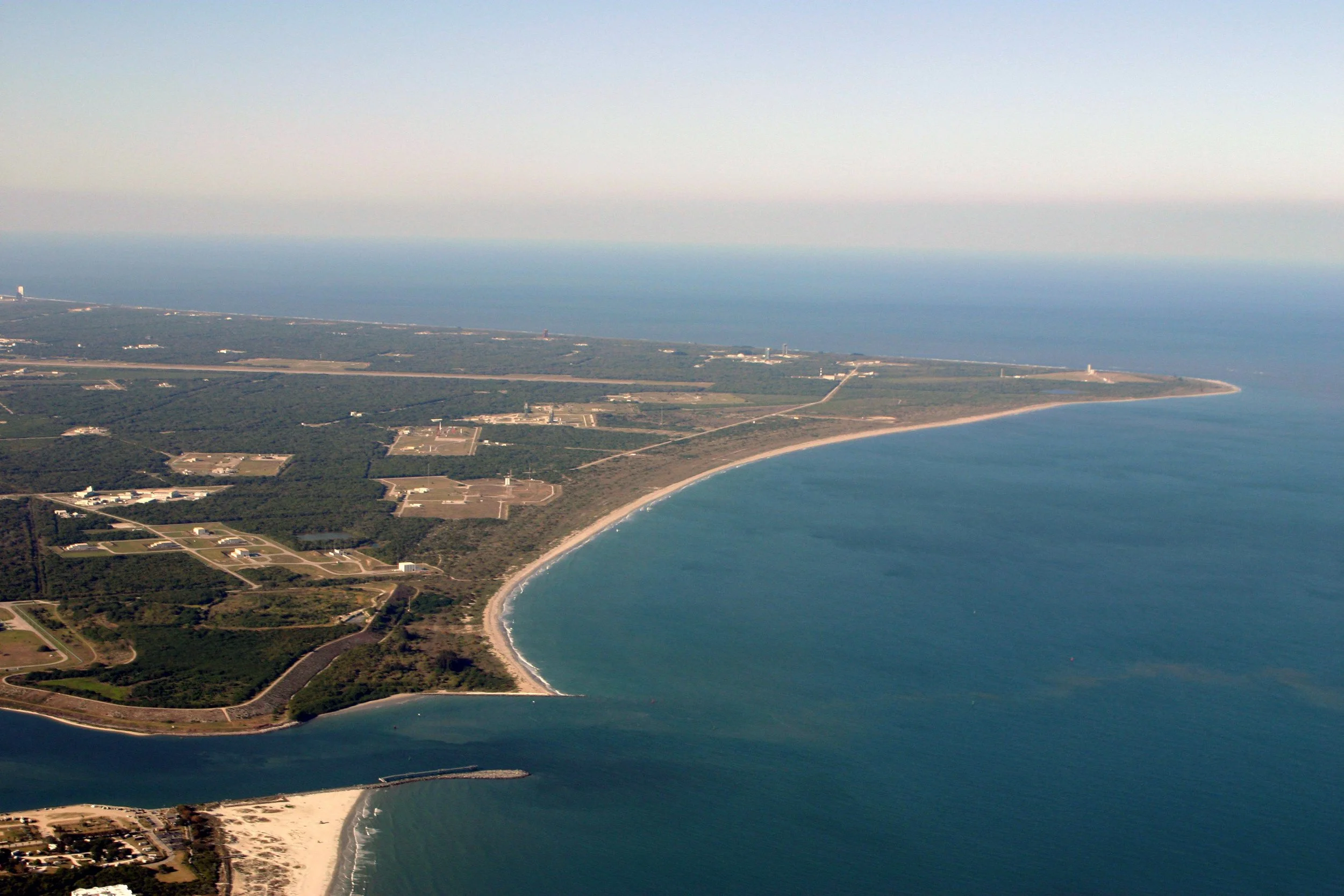
Aerial Stock Image By: Michael Howard - We Report Space
This new complex (if built) would then be the closest launch complex to the very active entrance to Port Canaveral. Now confirmed as a possibility, this new launch site would possibly be called LC-51. Should this pad be developed and become a reality, it could very possibly disrupt the dozens of cruise and cargo ships that come and go daily from Port Canaveral.
Article by: Michael Howard – We Report Space
Aerial Stock Images By: Michael Howard – We Report Space
CRS-34 Returns Home
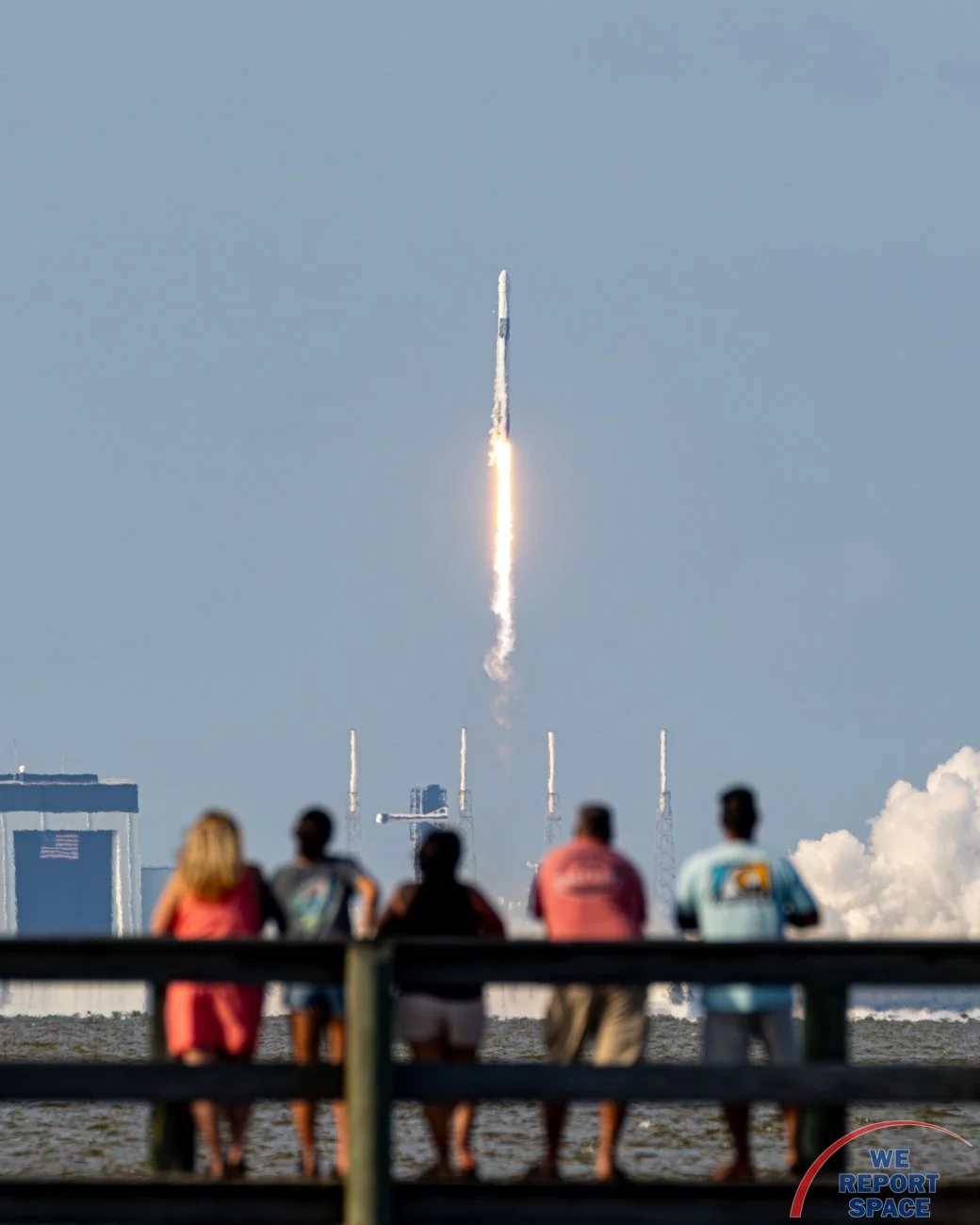
CRS-34 Heads to the I.S.S.
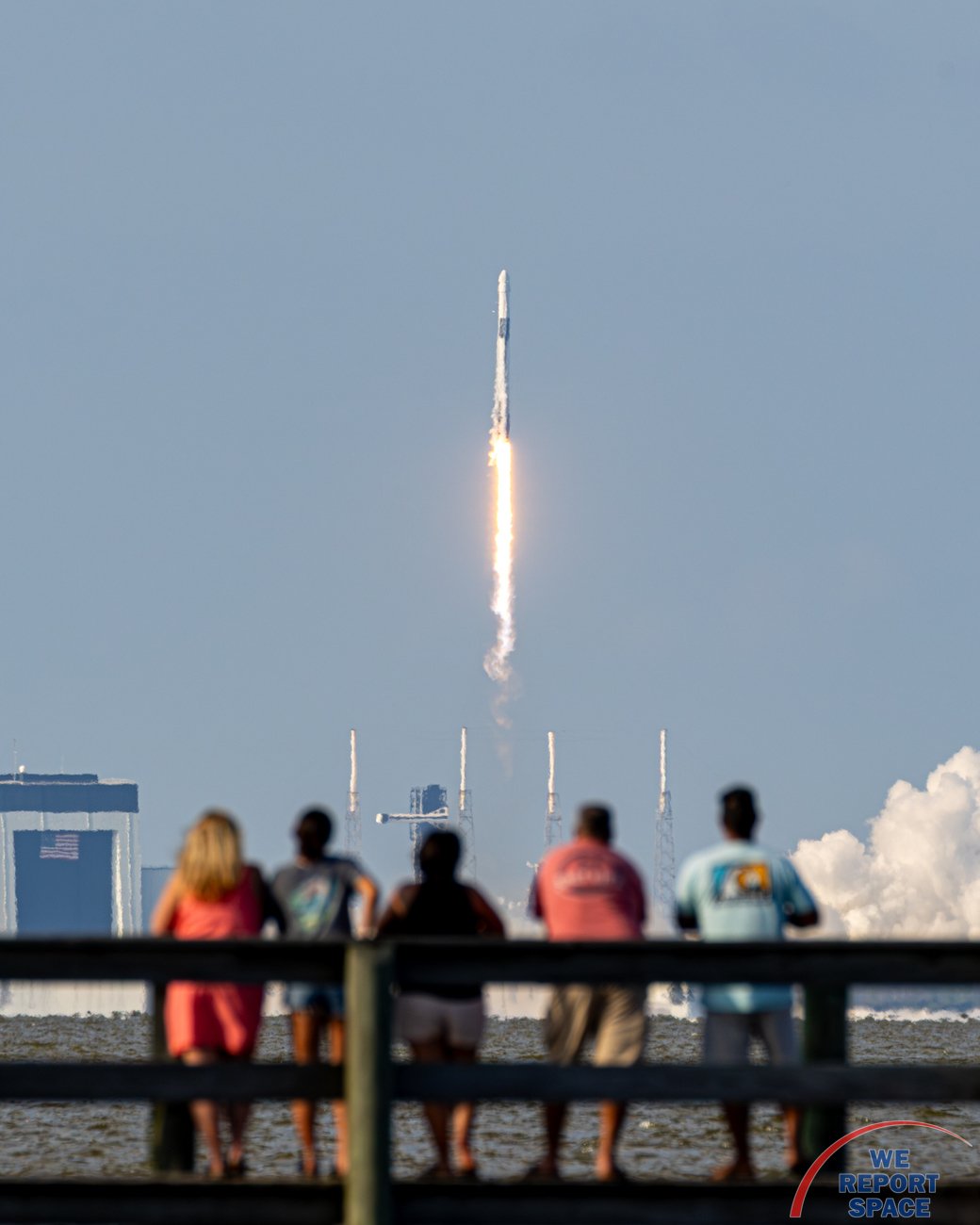
Launch of CRS-34 Image Credit: Michael Seeley - We Report Space
Houston TX. – On the early afternoon of June 16, 2026, a SpaceX Cargo Dragon undocked from the International Space Station (I.S.S.). Located on the forward section of the Harmony Module, the Dragon capsule undocked at 12:25 PM EDT after a stay of a month on orbit. The departure was originally scheduled for noon; however teams wanted to make certain that Dragon and all required systems were ready for undocking. At the time of undocking, the I.S.S. were over the North Pacific.
This mission for NASA was the Crew Resupply Mission 34 or CRS-34.
CRS-34 was launched back on May 15, 2026 from LC-40 and arrived at the I.S.S. hours later on May 17, 2026. CRS-34 carried multiple experiments as well as food and supplies to the astronauts currently aboard the station.
Like no other supply craft to the I.S.S., Cargo Dragon has the ability bring back to Earth experiments and other needed articles safely back to Earth.
Cargo Dragon made a splashdown off the California coast on the early morning of June 17, 2026. The official splashdown time was 8:11 AM EDT.
Article By: Michael Howard – We Report Space
Image Credit: Michael Seeley – We Report Space
Three Blue Birds Fly
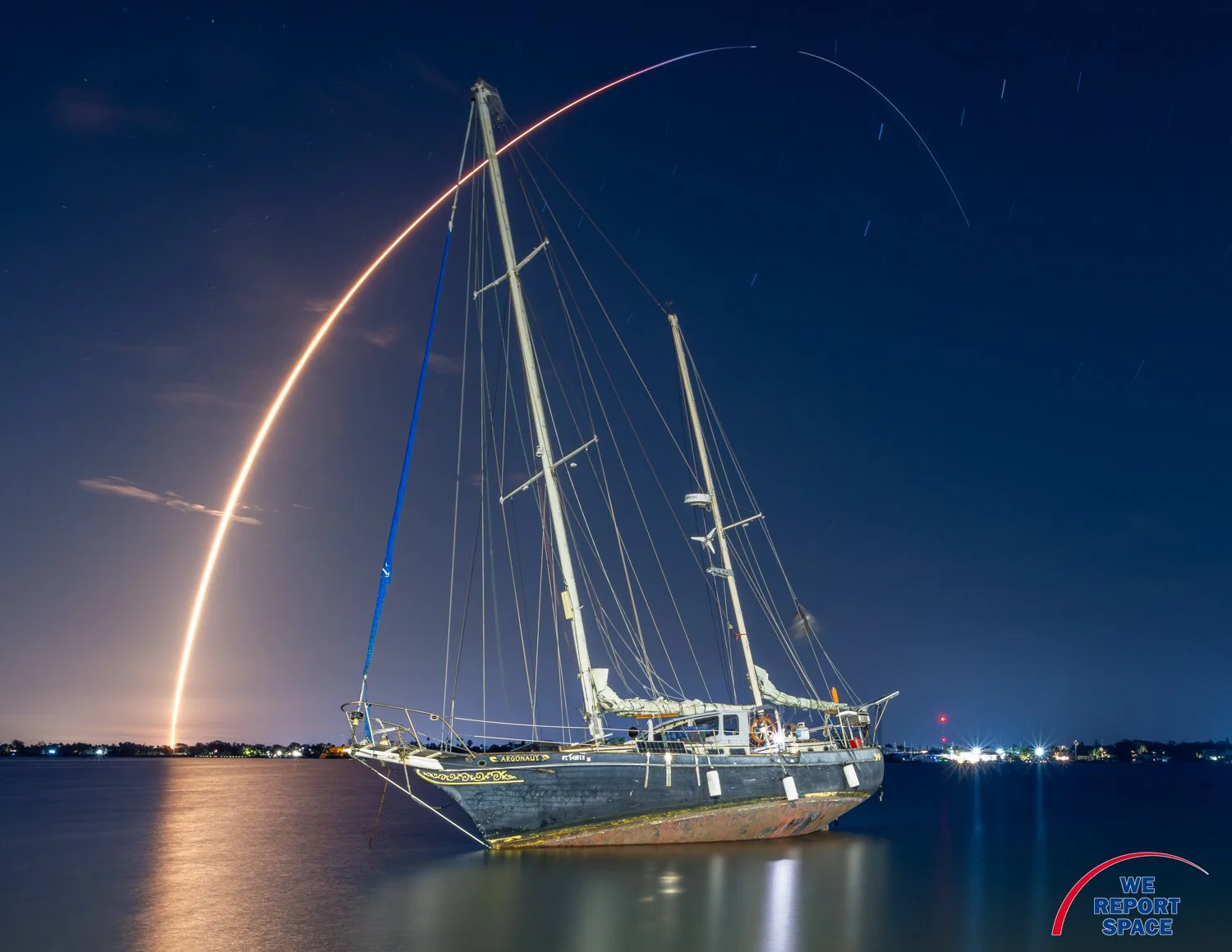
Three Blue Birds Take Flight
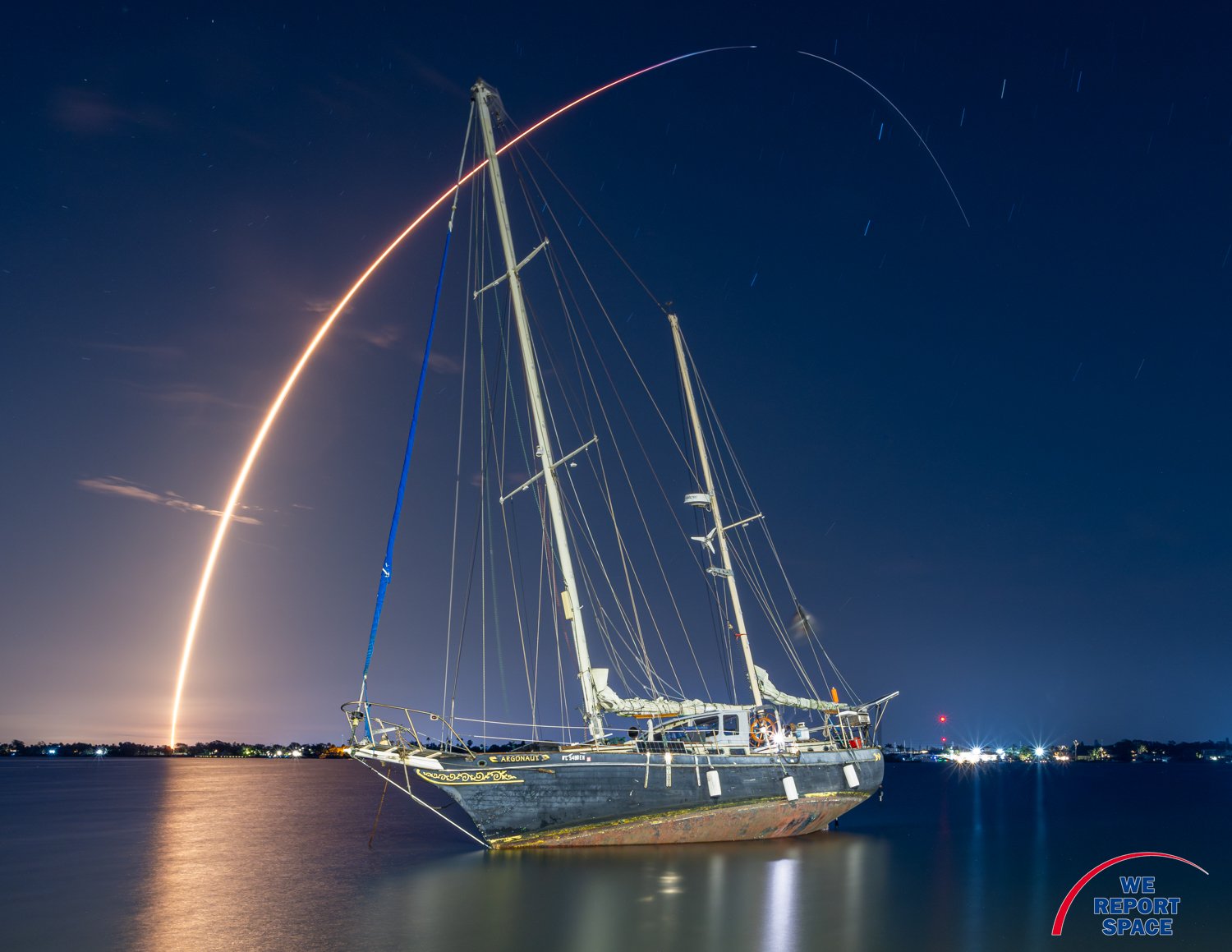
Three Blue Birds Take Flight - Image Credit: Michael Seeley - We Report Space
Cape Canaveral S.F.S. FL. – In the very early morning hours of June 17, 2026, SpaceX sent to space the next installment of the AST Space Mobile satellites. The payloads for this mission were the Blue Bird 8-10 direct to cell communication satellites. The launch came at 2:39 AM EDT from Launch Complex 40. Shortly after launch the first stage booster made a successful landing down range on the recovery ship “A Shortfall of Gravitas”.
Image Credit: Michael Seeley – We Report Space
The We Report Rewind For the week of June 14, 2026
The We Report Space Rewind for the week of June 14, 2026
Cape Canaveral S.F.S. FL-
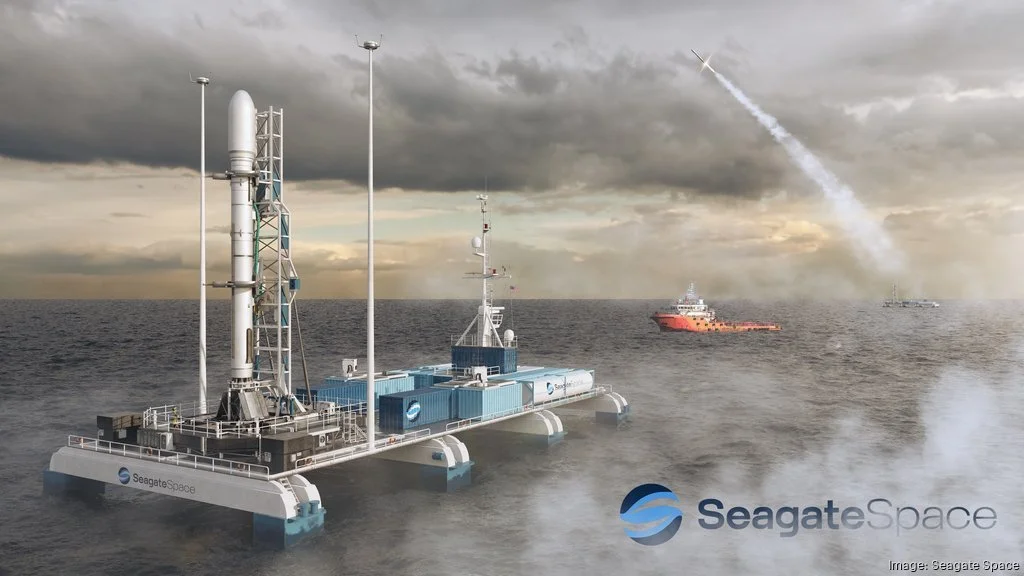
In a recently seen press release from Space Florida, it is being reported about a new launch provider that is looking to bring floating launch platforms to our Space Coast.
Seagate Space, a company based in the St. Petersburg Florida area has partnered with Space Florida to bring “Project Manta” to our Space Coast.
A mobile floating launch system, the Seagate Space system is not that dissimilar to those of other tested floating launch systems like that of Sea Launch that operated in the Pacific Ocean a couple of decades ago or the Chinese that have launched the Gravity-1 rocket from an ocean going ship back in 2024. While these platforms or modified ships have been used, Seagate Space is bringing a new idea and concept to the Space Coast.
While many of us have seen rocket boosters from SpaceX and Blue Origin return their first stages back on autonomous recovery ships, this might be a unique experience to see one leave port on its way to an offshore launch site.
In a statement from a press release from Space Florida:
“Our partnership with Seagate Space is a great example of how Florida is cultivating an innovation ecosystem that leverages everything the state has to offer, while empowering companies to stay and build here,” said Rob Long, Col. (Ret.), President and CEO of Space Florida. “Space Florida’s role is to be a force multiplier, and our engagement consistently helps unlock bigger outcomes, more capital, and stronger companies choosing Florida time and time again. Seagate Space represents the future we’re investing in.”
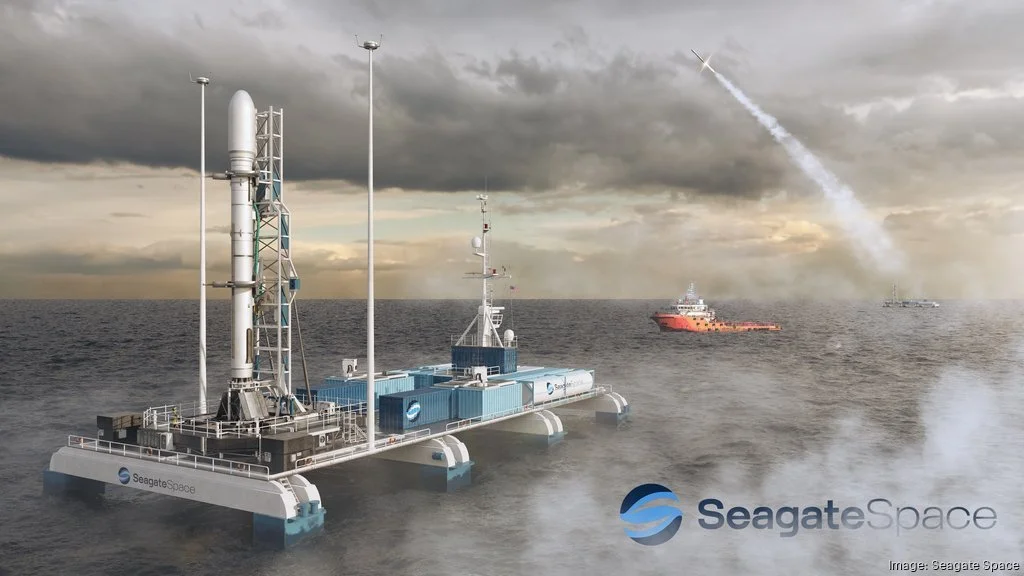
Image Credit: Seagate Space
In this same Space Florida press release, Seagate Space made the following comment:
"We are ecstatic to receive meaningful support from Space Florida that accelerates the next stage of our development," said Michael Anderson, co-founder and CEO of Seagate Space. "The opportunity to supplement early-stage private investment with public capital shows our state's commitment to fostering homegrown innovation. As we grow, we see a bright future in Florida with the people, capital, and partners that startups need across phases."
Florida’s Space Coast truly is the busiest launch area of the world and is bringing in new and inventive ideas along with the companies that want to develop new solutions and alternative launch services to our area.
Story by: Michael Howard with quotes from Space Florida press release
Seagate Space Image Credit: Seagate Space
Cape Canaveral S.F.S. FL-
Is Cape Canaveral getting a new launch pad? There are several outlets reporting that the military is looking at the idea of placing a new launch complex a couple of miles south of the current LC-46. The area would be possibly be an undeveloped area near the historic pads of LC-25, LC-29 and LC-17. This new complex (if built) would then be the closest launch complex to the very active entrance to Port Canaveral. Again, not confirmed, but this might possible be called LC-51. Should this pad be developed, it could disrupt the dozens of cruise and cargo ships that come and go daily from the port. We Report Space will monitor developments and report as new information arrives.
Article by: Michael Howard – We Report Space
Hawthorn CA. –
In one of the most anticipated IPO’s (Initial Public Offering) in history, SpaceX became a publicly offered company just before noon on June 12, 2026. Millions of shares were traded in a few short hours before the close of the market. Opening at a share price of $150, the stock closed at $160.95. The stock symbol for SpaceX is SPCX. With this offering, it is being said that Elon Musk became the world’s first trillionaire.
Article By: Michael Howard – We Report Space
Starlink 10-54 from LC-40 Image Credit: Graham Smith - We Report Space
Cape Canaveral S. F. S., Fl. -
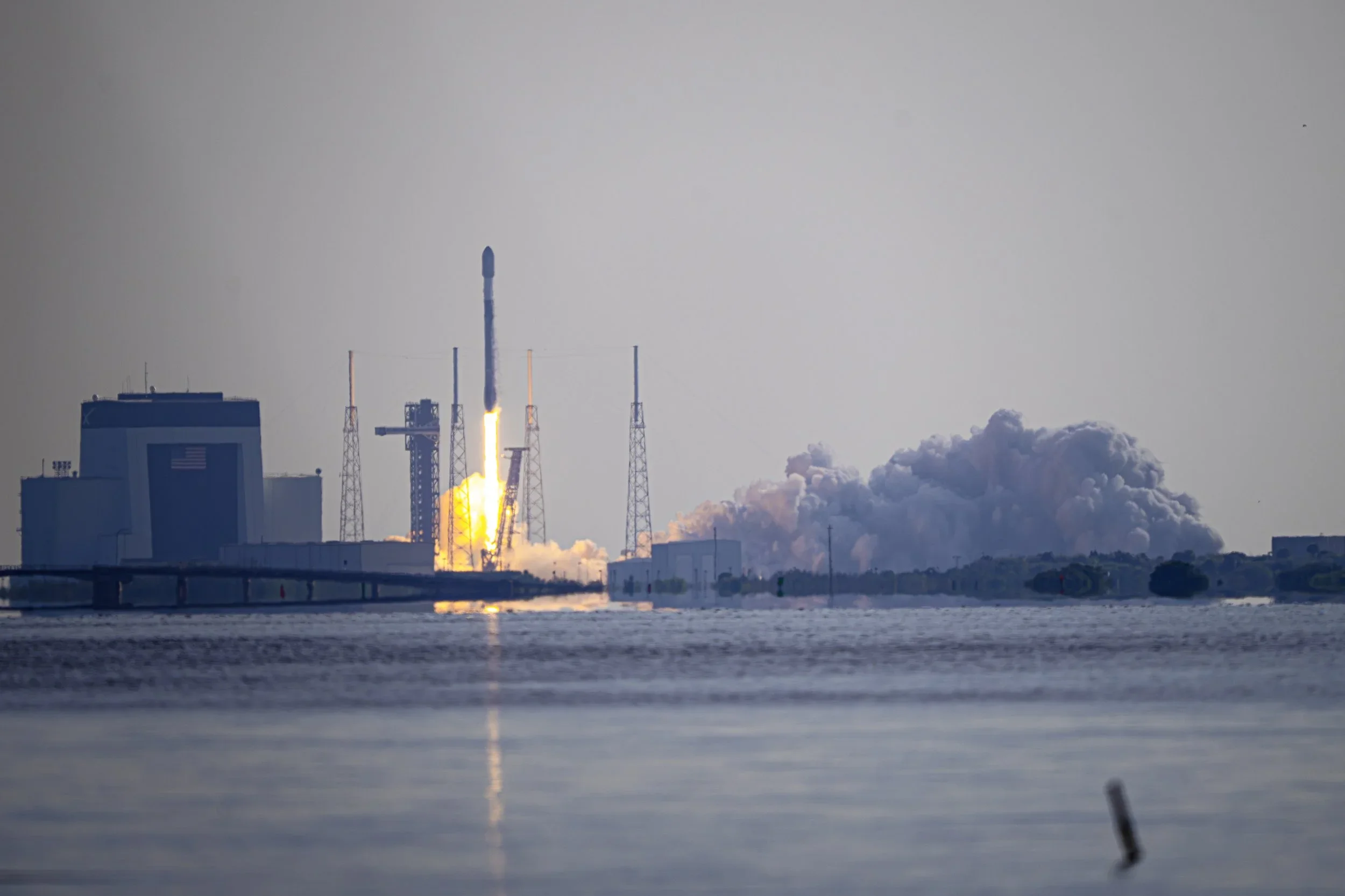
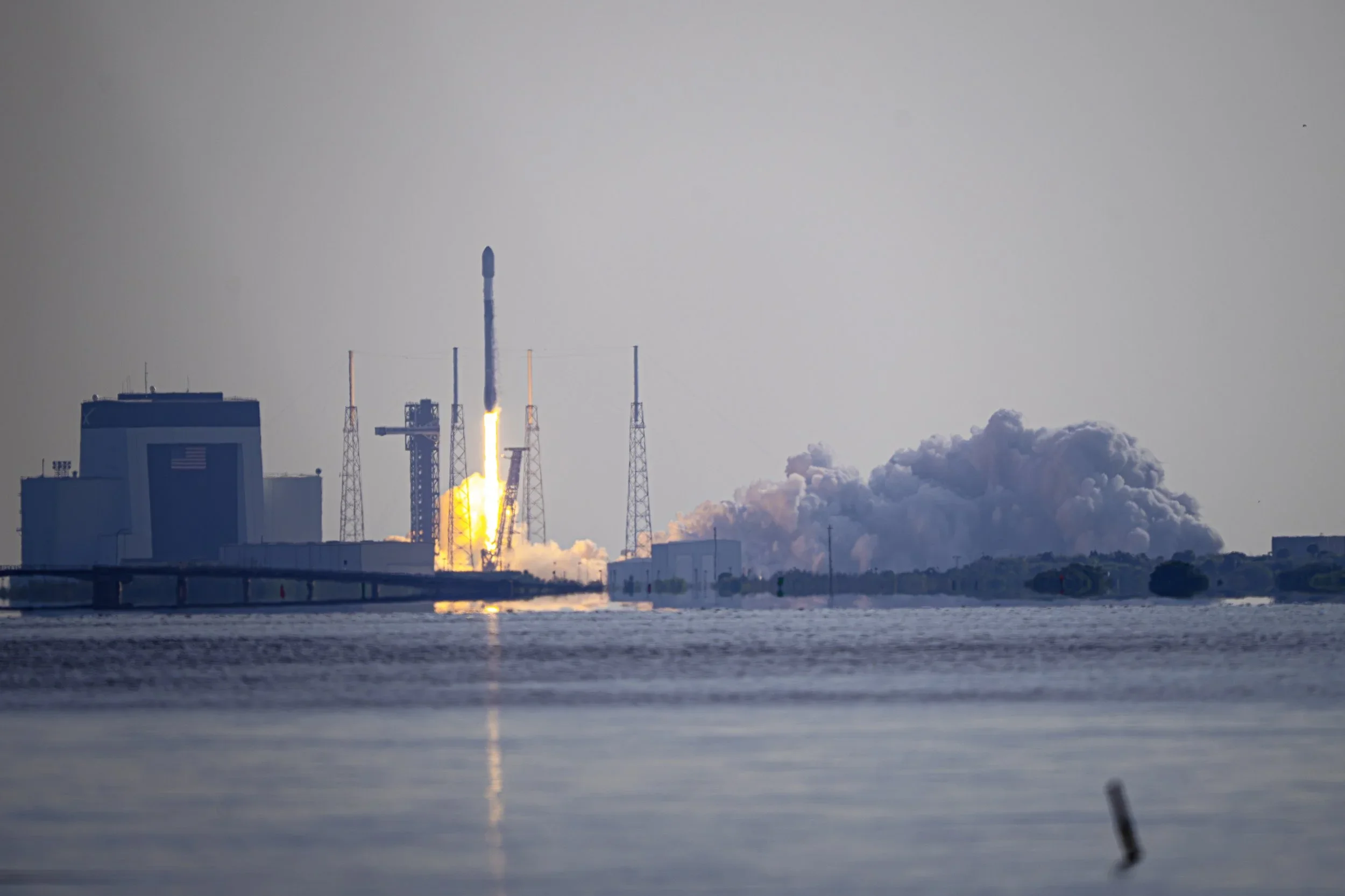
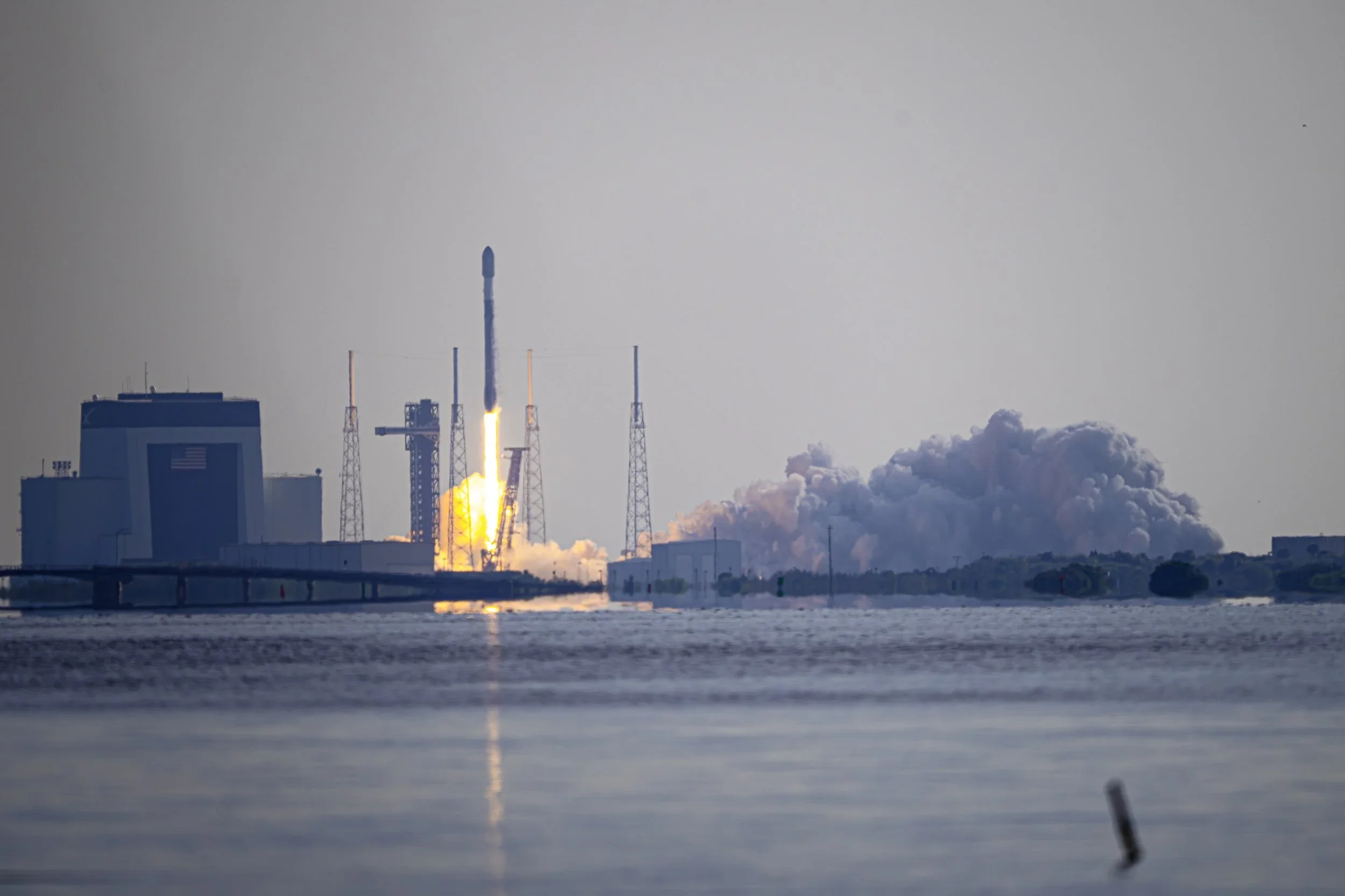
With sporadic ominously dark clouds descending on the Cape Canaveral Space Force Station, SpaceX decided to have 2 special events for Friday June, 12.
The long awaited IPO for SpaceX stock is set to occur, and the second event a bit more routine. Rumbling away from SLC # 40, SpaceX ignited the 9 Merlin engines on the Falcon 9 First Stage Core (B1080) which carried its payload of 29 StarLink v2-mini communications satellites in a NE trajectory.
With the return of the first stage core (27th time) and successful landing SpaceX completed their 70th successful mission of 2026.
Article: Graham Smith – We Report Space
Image: Graham Smith – We Report Space
A Day After Looking Back, ULA Takes a Step Forward: First Vulcan Stacks for Amazon's Constellation
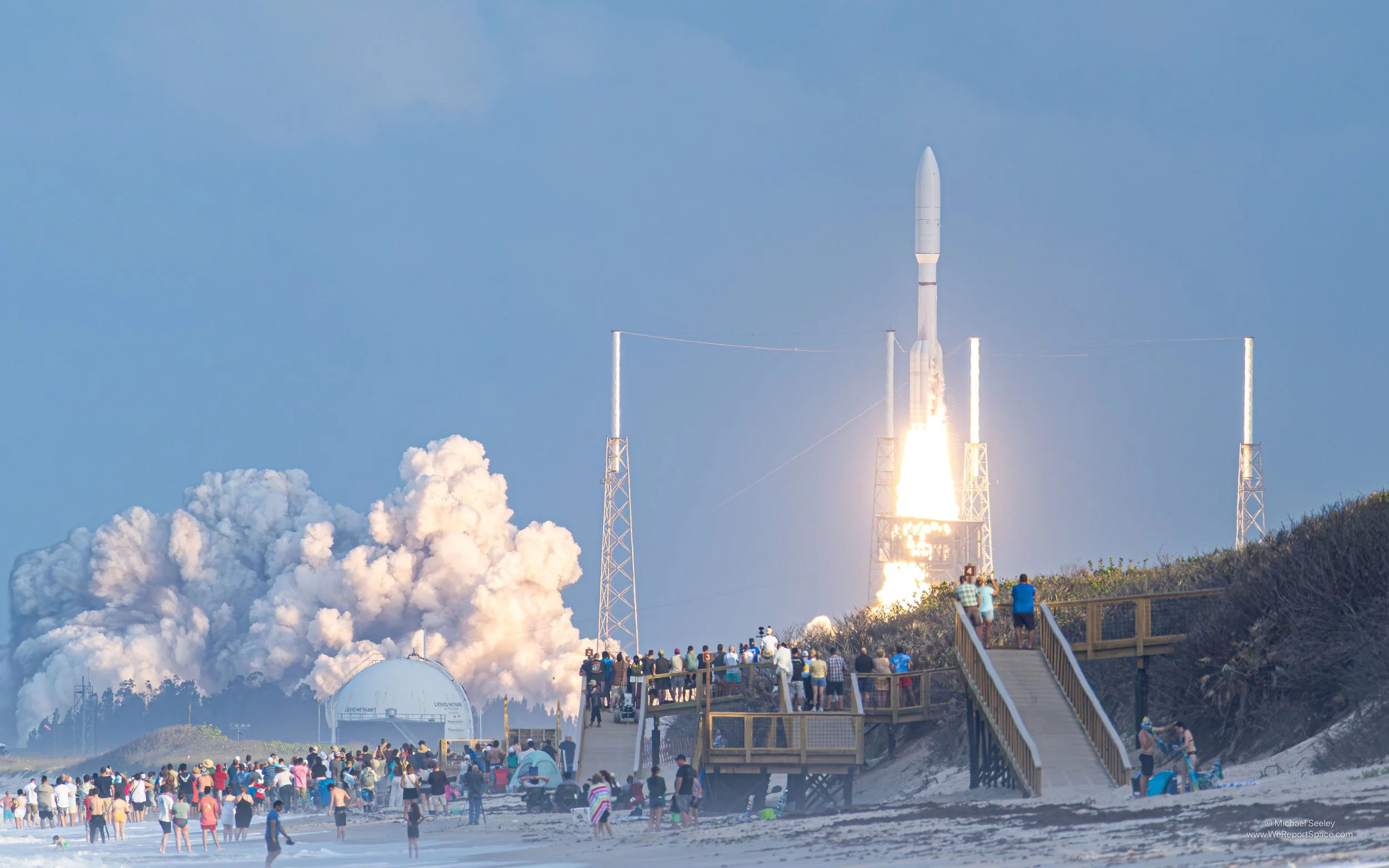
ULA's first Vulcan rocket for Amazon's Leo constellation is stacking at Cape Canaveral, debuting a new Centaur stage. Plus, Atlas V Leo 8 launches July 3.
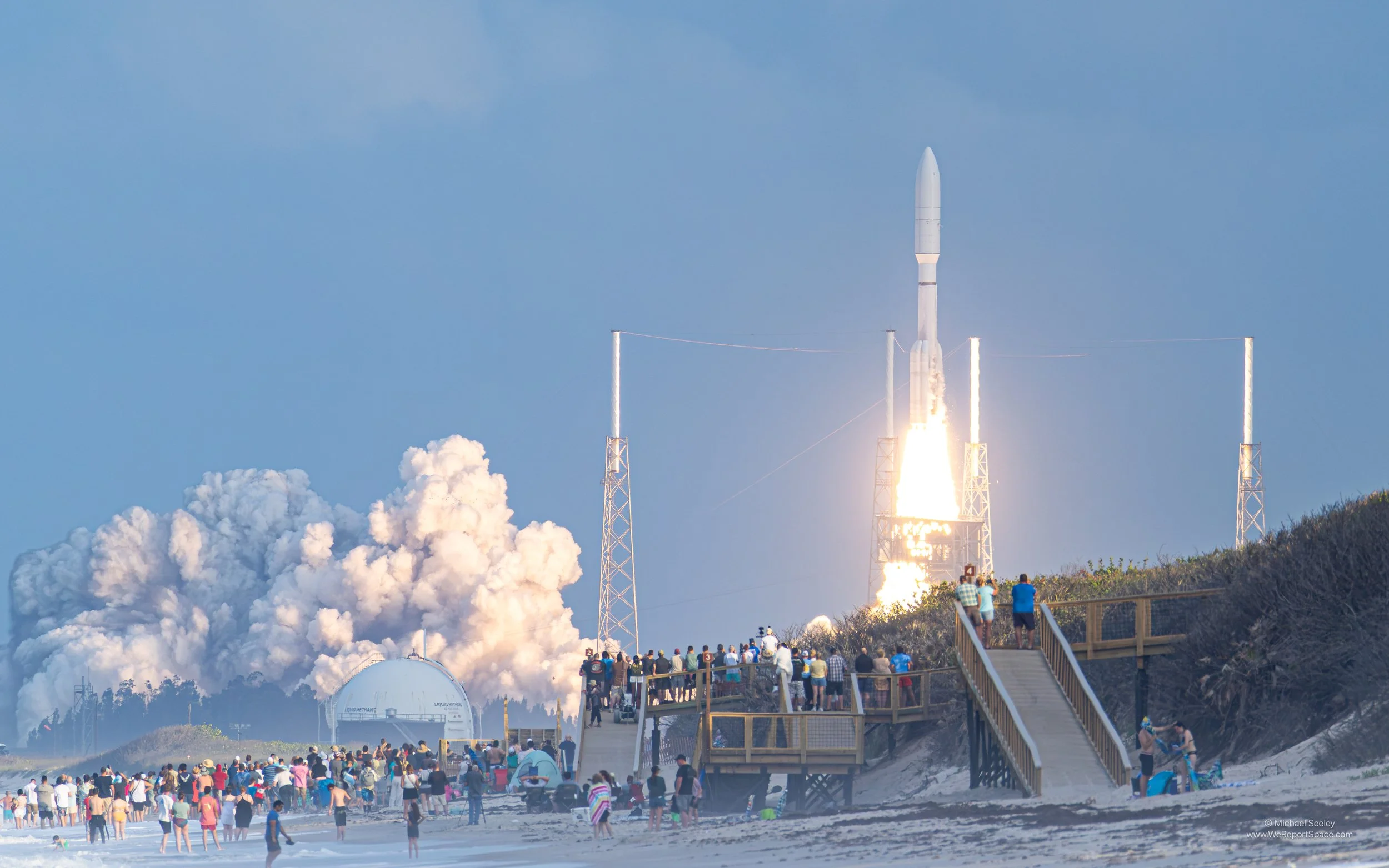
Project Kuiper Atlas V by United Launch Alliance by Michael Seeley
An Atlas V climbs away from Space Launch Complex 41 at Cape Canaveral, carrying the latest batch of Amazon Leo satellites into orbit. It's a scene that's become familiar on the Space Coast, and one that's about to change.
Yesterday we looked back at the Delta IV Heavy and the uncertain road Vulcan Centaur has traveled to take its place. Today, ULA has news that shows exactly where that road is heading next.
According to ULA's latest status report, the team has begun stacking and processing the first Vulcan rocket inside a brand new Vertical Integration Facility built specifically for Amazon's Leo constellation missions. Designated VC6L, this Vulcan will carry the ninth batch of operational broadband satellites for Amazon Leo, the first time an Amazon Leo payload has flown on Vulcan rather than Atlas V.
The vehicle is also debuting new hardware. ULA has integrated a LEO-optimized version of the Centaur upper stage atop this Vulcan, a variant designed specifically for low Earth orbit constellation deployments like Amazon's. Stacking this new stage configuration for the first time lets the team validate ground support equipment and stage interfaces that haven't been used in this combination before.
In the meantime, Atlas V continues carrying the load. ULA's next launch is Atlas V Leo 8, targeting July 3 at 12:03 a.m. Eastern from SLC-41 at Cape Canaveral, carrying the eighth batch of Amazon Leo satellites. The booster has already been hoisted into the Vertical Integration Facility, the five solid rocket boosters are mated, and the Centaur upper stage has been stacked.
Taken together, it's a snapshot of a launch provider in transition. Atlas V keeps a reliable cadence going for Amazon's constellation buildout while Vulcan works through the first-time procedures that will eventually make it the workhorse for these missions. The Leo 7 mission, which flew on Atlas V from SLC-41 on May 29, already pushed the constellation closer to commercial service. Leo 8 keeps that momentum going this summer, and Leo 1 on Vulcan will be the one to watch after that.
Source: ULA Status Report, June 12, 2026
SpaceX Starlink 10-54
Cape Canaveral Space Force Station, Fl. ~
With sporadic ominously dark clouds descending on the Cape Canaveral Space Force Station, SpaceX decided to have 2 special events for Friday June, 12.
The long awaited IPO for SpaceX stock is set to occur, and the second event a bit more routine. Rumbling away from SLC # 40, SpaceX ignited the 9 Merlin engines on the Falcon 9 First Stage Core (B1080) which carried its payload of 29 StarLink v2-mini communications satellites in a NE trajectory.
With the return of the first stage core (27th time) and successful landing SpaceX completed their 70th successful mission of 2026.
Article: Graham Smith
Images: Graham Smith
#spacex #falcon9 #starlink #capecanaveralspaceforcestation
#floridaspaceflight #karsparkksc #usspaceforce #nasakennedy #nasa #spacecoastdaily #launch #floridaspaceflight @emrekelly
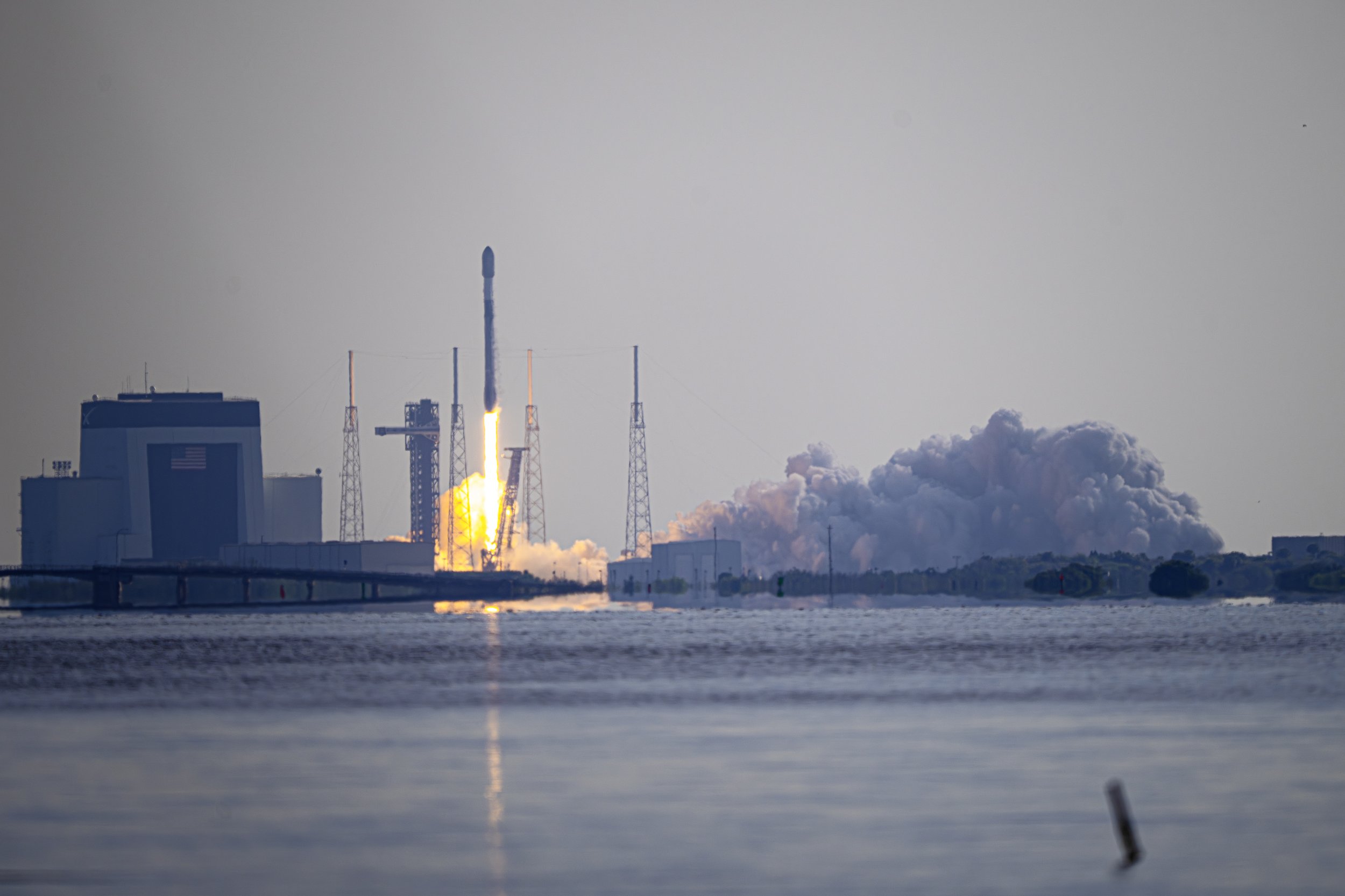
SpaceX StarLink 10-54 launching from SLC # 40
Ten Years Ago Today: Remembering the Delta IV Heavy and the Rocket That Defined an Era
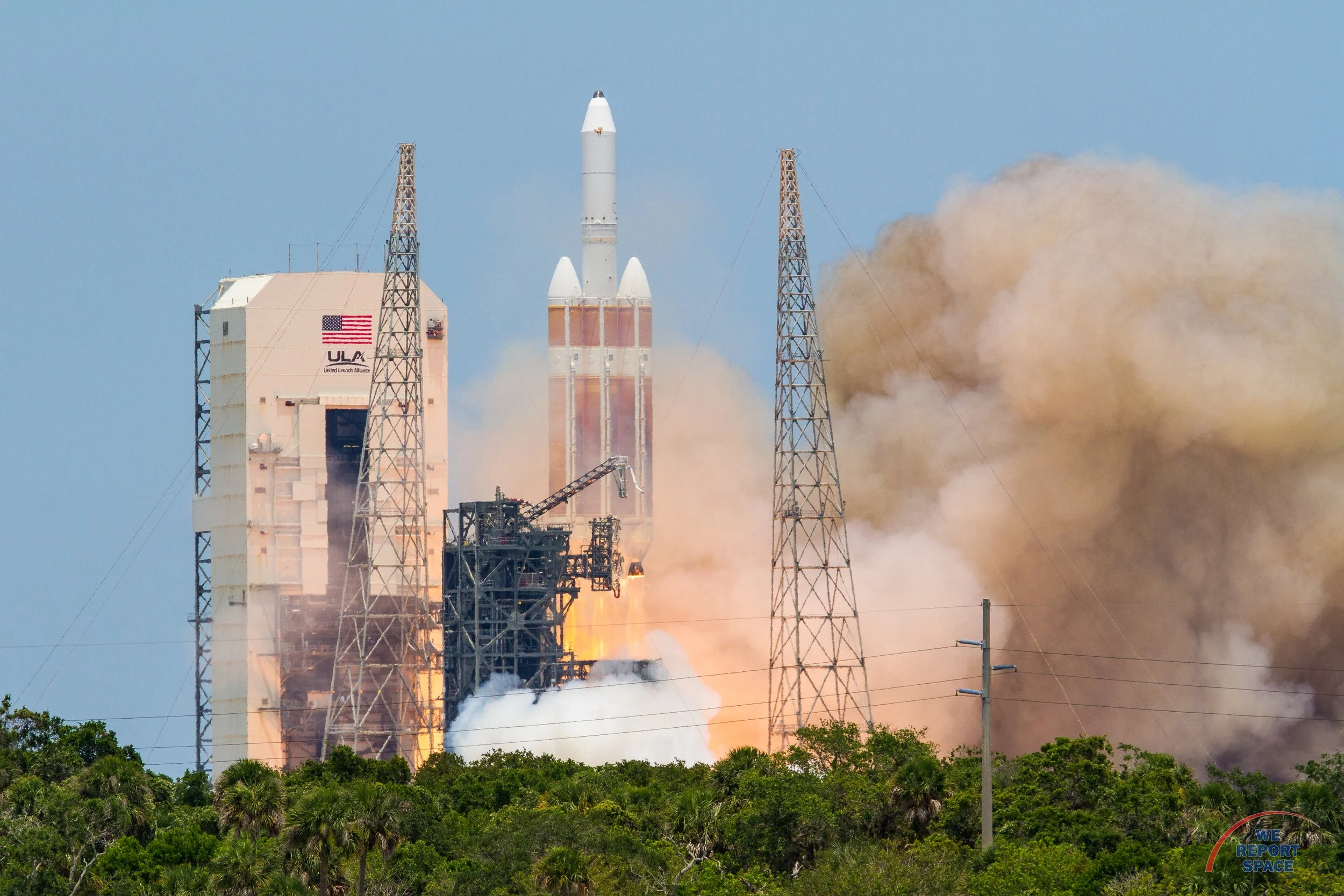
Ten years ago today, a United Launch Alliance Delta IV Heavy rocket lifted off from Space Launch Complex 37B at Cape Canaveral carrying the NROL-37 mission for the National Reconnaissance Office. It was one of 16 missions the Delta IV Heavy would fly over its lifetime, and for those of us who were there to photograph it, one of the most visually extraordinary rockets ever to leave Florida's Space Coast.
The Delta IV Heavy is gone now. Its final flight came in April 2024, closing the book on a rocket program that traced its roots back 60 years to the earliest days of the American space program. Standing at the pad, the Heavy was unmistakable: three Common Booster Cores strapped together, each burning liquid hydrogen, producing a fireball at ignition that briefly engulfed the lower third of the vehicle before the rocket climbed free. It was, as more than one engineer called it, the most metal thing in the launch business.
The Delta IV Heavy first flew in 2002. Over the course of its operational life it launched some of the most significant payloads in American national security and science history. It carried NASA's Orion spacecraft on its first flight test in December 2014, an unmanned shakedown mission called EFT-1 that put the capsule through the high-speed re-entry conditions it would need to survive on the way back from deep space. It sent the Parker Solar Probe on its way to the Sun in 2018. And it launched mission after classified mission for the National Reconnaissance Office, the agency responsible for America's spy satellite constellation.
All but four of its 16 missions were for the NRO. Most launched from SLC-37B here at Cape Canaveral. A handful flew from Vandenberg in California. Every one of them was a spectacle.
What replaced it is a different kind of rocket, and its path to operational status was harder than ULA anticipated. Vulcan Centaur, designed to replace both the Atlas V and the Delta IV Heavy, flew its second certification mission in October 2024, but a solid rocket booster nozzle fell off mid-flight, delaying Space Force certification by months. Vulcan finally received full certification for National Security Space Launch missions in March 2025. Then, at the end of that year, longtime ULA CEO Tory Bruno departed the company, leaving a leadership void at a critical moment in Vulcan's development. 2025 fell short of ULA's launch projections by most measures.
But Vulcan is flying. It uses Blue Origin BE-4 engines burning liquid natural gas, comes in configurations ranging from no solid rocket boosters to six, and is certified to fly the most demanding national security payloads. It is the primary launch vehicle for Amazon's Project Kuiper broadband constellation, with the first Kuiper launch on Vulcan scheduled for September from SLC-41 at Cape Canaveral. ULA says 2026 and 2027 will be pivotal years for establishing Vulcan's place in a launch market now crowded by Falcon 9, Falcon Heavy, and New Glenn.
Whether Vulcan fills the void left by the Delta IV Heavy depends on what you valued about the older rocket. As a capable heavy lift vehicle, Vulcan makes a credible case for itself. As a spectacle, nothing quite replaced what happened at SLC-37B when those three cores lit up.
We were there for NROL-37 ten years ago today. The photos are in the gallery below.
Photography by Michael Seeley, We Report Space
Artemis III Crew Announced
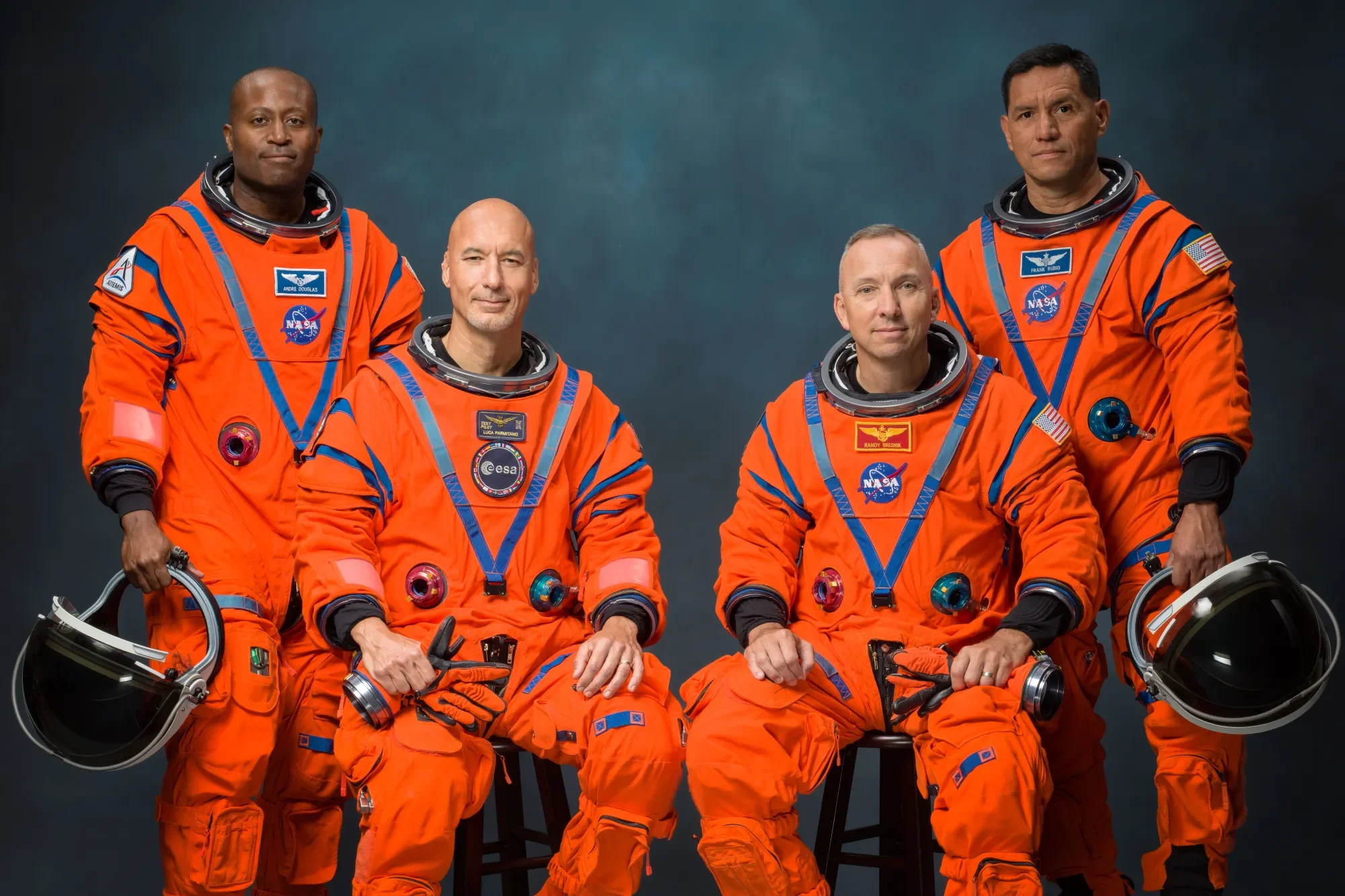
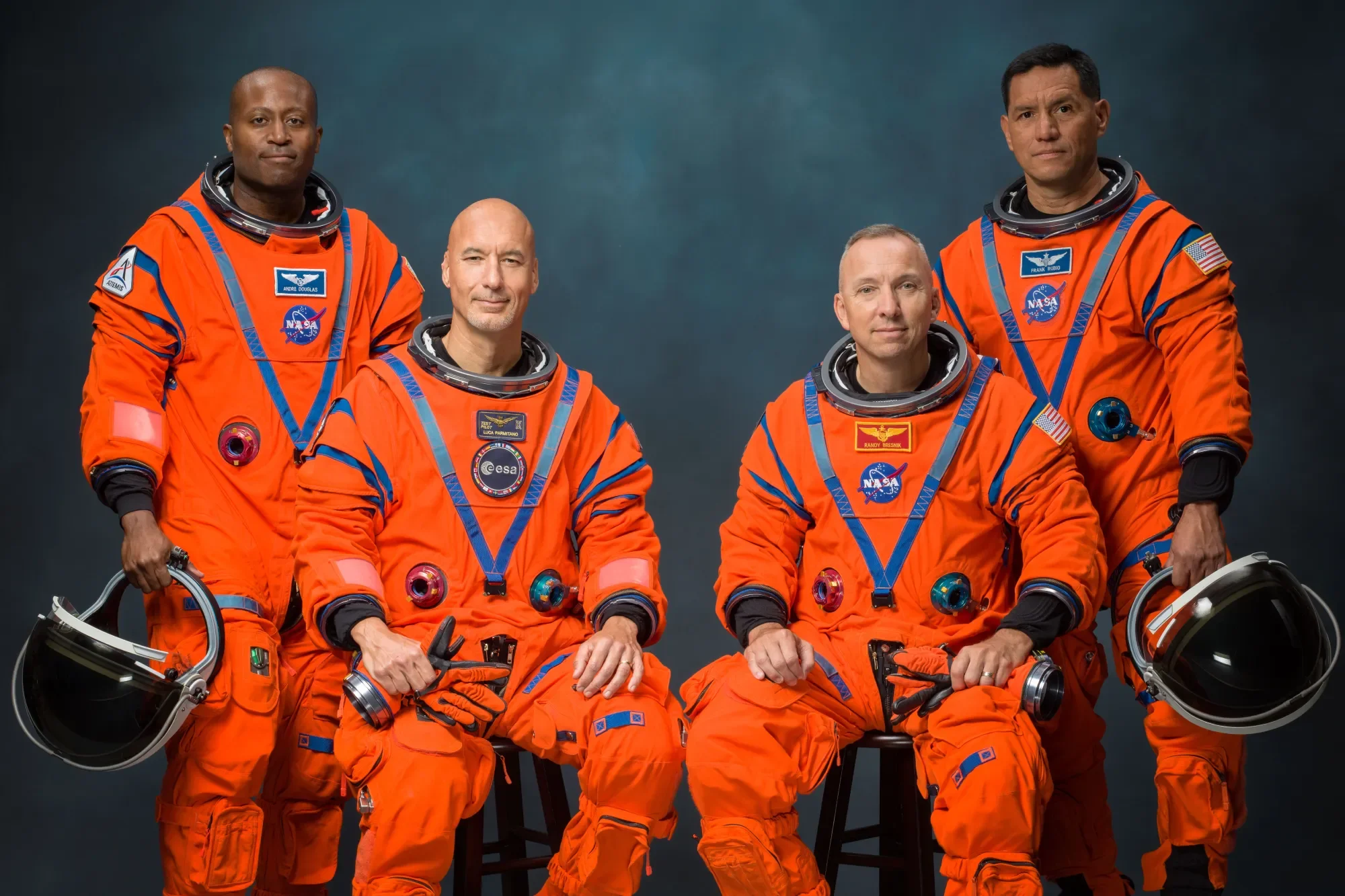
Coming off the incredible success of Artemis II, today, June 9, 2026 NASA and the European Space Agency (ESA) announced the names of the Artemis III crew and the future plans for the Artemis program going forward. Image Credit: NASA / Bill Stafford
Johnson Space Center, TX. – Coming off the incredible success of Artemis II, today, June 9, 2026 NASA and the European Space Agency (ESA) announced the names of the Artemis III crew and the future plans for the Artemis program going forward.
The Artemis III crew is: Commander: Randy Bresnik (NASA), Pilot: Luca Parmitano (ESA) and NASA Mission Specialists, Andre Douglas and Frank Rubio.
The Artemis III mission will be conducted in Low-Earth orbit and last nearly two weeks. During the mission, the crew will be conducting maneuvers in space that have never been done at this particular level before. Maneuvers conducted by the crew that will include multiple dockings with two separate and different spacecraft that are the SpaceX Starship and the Blue Origin MK-1 Lunar Lander.
These procedures are necessary and for this mission, can be conducted close to home on the unlikely chance that the crew would have to return to Earth and be only hours from a splashdown verses a several day return from the Moon.
In a statement from NASA: "Today we take another bold step in humanity’s return to the Moon, building on the extraordinary foundation laid by the Artemis II astronauts,” said NASA Administrator Jared Isaacman. “Their achievements reignited global excitement for exploration, and now they pass the torch to the Artemis III team, Randy, Luca, Frank, and Andre. Artemis III will demonstrate the power of American innovation and international partnership as we test complex rendezvous and docking operations and advance the technologies that will one day carry us deeper into the solar system. This mission will require the most awe-inspiring coordination of heavy-lift rocket launches in history, drawing on the talent and capability of teams across government and the spaceflight community. The Artemis III astronauts, alongside ESA and our international partners, and the tens of thousands of the best and brightest across the agency and industry, are ushering in a new Golden Age of exploration carrying forward the hopes and dreams of the next generation just as the Apollo astronauts did for so many of us.”
With this mission crew now announced, this is the first for ESA with the addition of Italian Astronaut and mission pilot Luca Parmitano.
In a statement from ESA: “Artemis III will push the boundaries of spacecraft operations in orbit. Luca’s assignment as pilot reflects the depth of European expertise in human spaceflight and draws on his extensive operational experience in high-pressure situations,” said Josef Aschbacher, ESA’s director general. “At the same time, ESA’s European Service Module will once again provide the critical capabilities that power Orion, demonstrating Europe’s enduring role at the very heart of the Artemis program. The news out of Houston today is a powerful recognition of ESA’s role in enabling humanity’s return to the Moon – and a key advancement in our partnership with NASA. Europeans can take pride in being part of this exciting journey."
All the astronauts but one has previous spaceflight hours prior to Artemis III. This will be the first flight for NASA astronaut and mission specialist Andre Douglas.
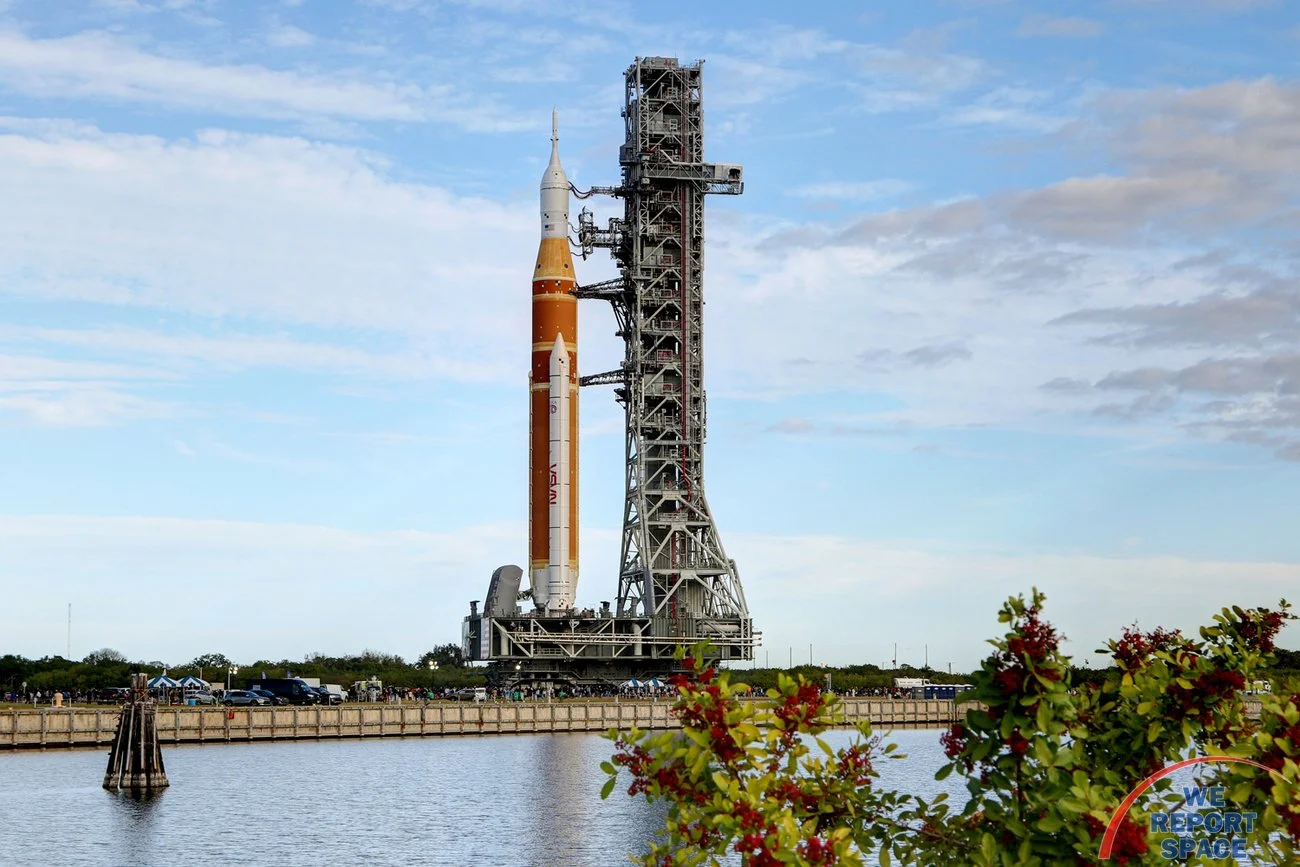
While no launch date has been set, the loss of the Blue Origin pad recently has set back some of the plans, but crews are working around the clock to have Artemis III and the components needed for flight ready in 2027.
Story By: Michael Howard – We Report Space
SLS Images By: Michael Howard – We Report Space
NASA Image By: NASA/Bill Stafford
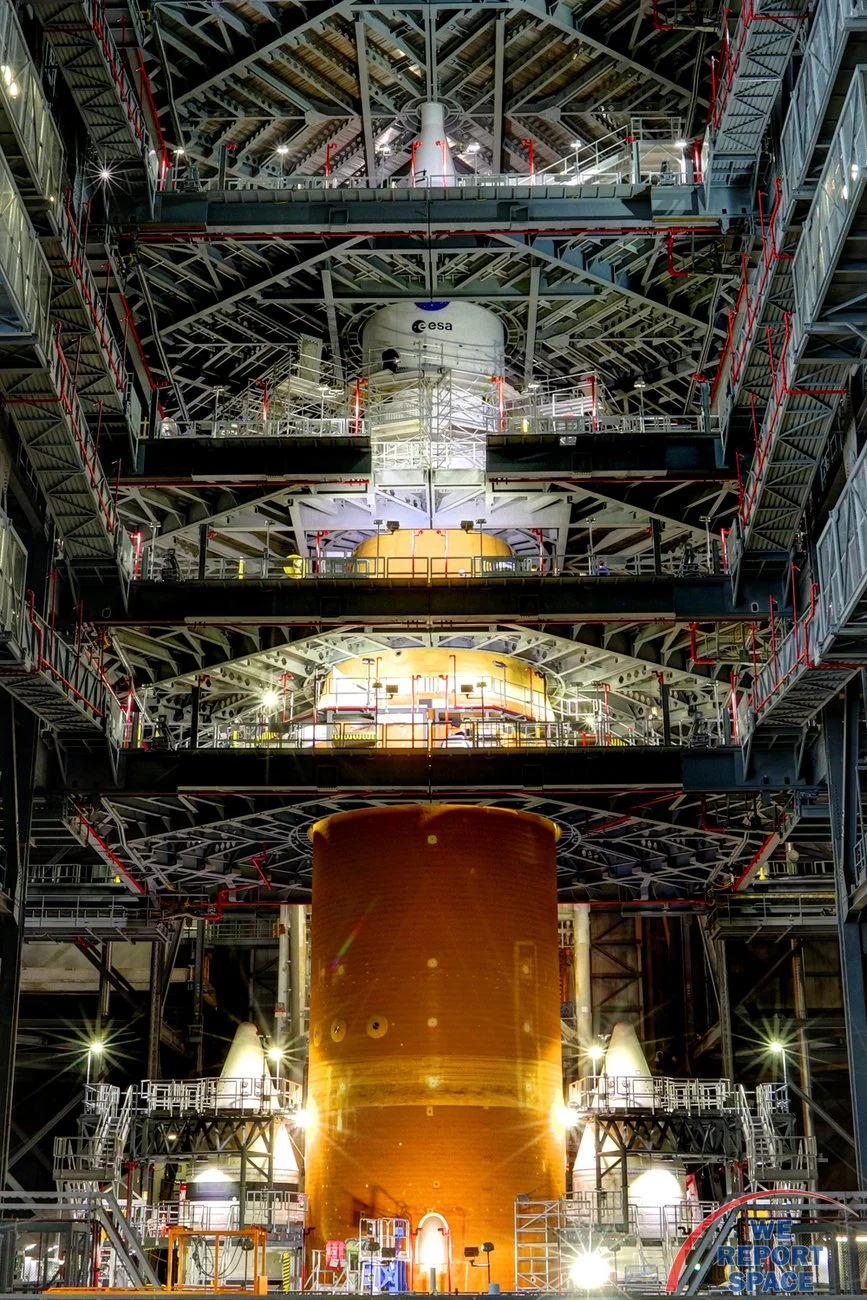
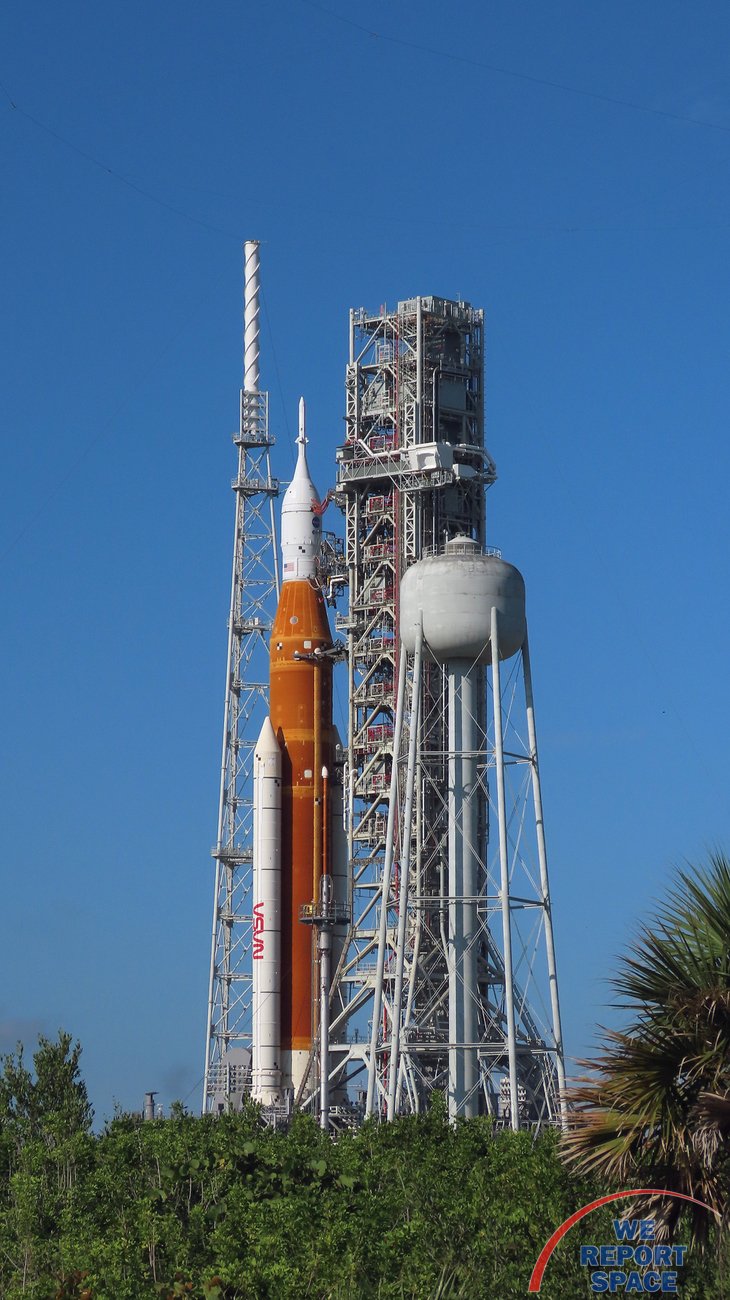

Axiom Space and Prada Reveal the Layer Astronauts Will Wear Closest to Their Skin on the Moon
When NASA astronauts step onto the lunar surface during the Artemis IV mission, one of the few things standing between them and the vacuum of space will be a garment co-developed by a Houston spaceflight company and an Italian fashion house.
Axiom Space and Prada unveiled the Liquid Cooling and Ventilation Garment today, the inner layer of the Axiom Extravehicular Mobility Unit spacesuit. The garment circulates cold water through a network of tubes routed across the body's major muscle groups, absorbing metabolic heat generated during spacewalks and carrying it away to the suit's life-support system, where it is expelled into space. A separate loop delivers fresh oxygen across the astronaut's face to continuously clear exhaled carbon dioxide.
The collaboration draws on Prada's background in engineered knitting and advanced materials to produce a garment designed for up to eight-hour spacewalks across multiple long-duration missions. Unlike earlier cooling garments, the Axiom version includes a fully redundant cooling circuit, providing a backup if the primary loop fails.
Axiom and Prada first announced their partnership in 2024 with the unveiling of the AxEMU's outer shell, built to withstand the thermal extremes and micrometeoroid environment of the lunar South Pole. The inner layer represents the next phase of that collaboration, moving from the suit's exterior to the layer worn directly against the astronaut's body.
Artemis IV is currently the next crewed lunar surface mission on NASA's schedule.
Source: Axiom Space

Image credit: Axiom Space
NASA's Most Powerful Antenna Is Offline After a Preventable Accident
Staff article, AI assisted
NASA has released a formal mishap investigation report detailing how DSS-14, the agency's most capable 70-meter deep space antenna, sustained between $4.1 and $4.6 million in damage on September 16, 2025, and remains offline as repairs continue.
The antenna, located at the Goldstone Deep Space Communications Complex in California's Mojave Desert, over-rotated beyond its design limits while tracking NASA's Juno spacecraft. The over-rotation severely damaged the antenna's internal cable wrap, a complex bundle of power cables, data lines, and fluid hoses that runs between the antenna's stationary base and its rotating structure. When the cables and hoses failed, an estimated 200,000 gallons of water, some of it contaminated with glycol coolant, flooded the antenna's base. No injuries were reported.
What is DSS-14 and why does it matter?
DSS-14, nicknamed "Mars" for the site where it sits at Goldstone, is one of the most significant antennas in human spaceflight history. Originally built as a 64-meter dish in 1966 and upgraded to 70 meters in 1988, it is part of NASA's Deep Space Network, the global system of large radio antennas that maintains communication with virtually every spacecraft NASA has ever sent beyond Earth orbit. The DSN operates three complexes worldwide, at Goldstone in California, Madrid in Spain, and Canberra in Australia, providing near-continuous coverage as the Earth rotates.
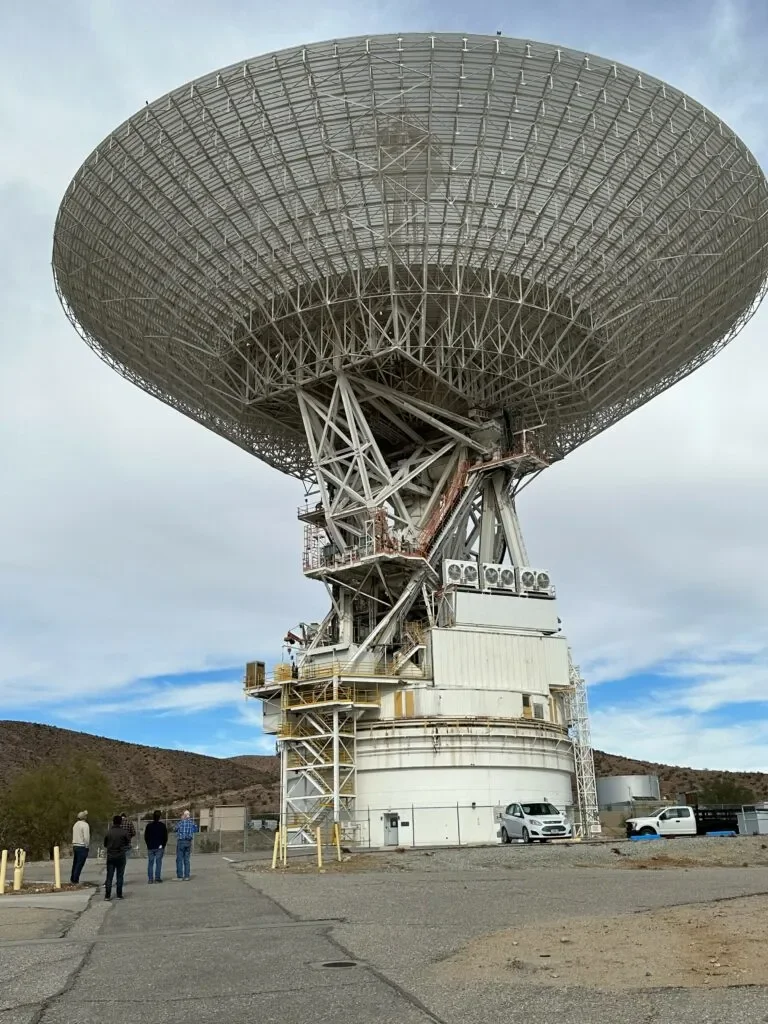
Image credit: science.nasa.gov
DSS-14 is the largest antenna in the Goldstone complex and one of only three 70-meter antennas in the entire DSN. At that size, it can communicate with spacecraft at the edges of the solar system, receive faint signals from Voyager 1 and Voyager 2 more than 15 billion miles away, and support planetary radar observations. Its loss represents a significant reduction in NASA's deep space communications capacity at a particularly demanding time, with active missions including the Juno spacecraft at Jupiter, the Voyager probes, and the ongoing Artemis program.
How it happened
The report identifies a cascade of failures over a 24-hour period preceding the mishap. The day before, maintenance personnel were troubleshooting a problem with the antenna's emergency stop system. During that work, multiple safety systems were inadvertently compromised. By the morning of September 16, operators at the Goldstone control room were repeatedly driving the antenna into its rotation limits and manually recovering it each time, without fully understanding why the limits kept triggering or what state the antenna's safety systems were in.
Critically, the antenna's hydraulic limit system, described in the report as the final failsafe against over-rotation, had been damaged in an earlier undocumented incident and was completely inoperable. The investigation board found no evidence that this system had been functionally tested in more than 20 years. When operators finally sent the antenna to track the Juno spacecraft, it rotated past all limits with nothing to stop it.
Making matters worse, after flooding was discovered, a command was issued to move the antenna to its standard stow position, which rotated it further into the over-wrap condition, causing additional damage.
What the investigation found
The Mishap Investigation Board identified four root causes: inadequate training of Goldstone personnel, insufficient written procedures, control logic that failed to give operators a clear picture of the antenna's state, and an over-reliance on undocumented institutional knowledge. The report is pointed in its assessment of the culture at Goldstone, describing a workplace that "prioritized a rapid return to operations over the health of assets or personnel" and that rewarded personnel for improvising outside their training rather than following established procedures. Operators were described as willing to "do whatever it takes to keep the antenna running," an attitude the board characterized as directly contributing to the mishap.
The board also noted that the antenna's emergency response plan had not been updated in more than 14 years, that safety procedures were routinely bypassed, and that four employees walked through the flooded antenna structure before electrical power was shut off.
Twenty recommendations were issued covering training reform, procedure updates, cultural change, hydraulic system remediation, and restored authority for supervisors over on-site technical staff.
What happens next
DSS-14 remains offline. The report indicates the unwrapping procedure was completed in November 2025, but full repair and return to service will require replacement of all 11 fluid hoses, at least 85 of 114 data and power cables, all 56 structural connecting rods, and extensive inspection and recertification of remaining components. Asbestos abatement is also required in portions of the antenna base damaged by flooding.
The loss of DSS-14 puts additional strain on the remaining two 70-meter antennas in the DSN network at Madrid and Canberra, and on the smaller 34-meter dishes at Goldstone, at a time when the number of active deep space missions requiring DSN support continues to grow.
Source: NASA Mishap Investigation Board Report, DSS-14 Azimuth Over-Rotation Mishap, March 30, 2026